
Baihui Cryogenic Equipment
Huzhou Baihui Cryogenic Equipment Co., Ltd
Huzhou Baihui Cryogenic Equipment Co., Ltd

Provide you with the latest enterprise and industry news
Industrial gases such as oxygen, nitrogen and argon are often stored as cryogenic liquids because the liquid form occupies much less space than the same product in gaseous form. However, most standard high-pressure cylinders need to be filled with gas rather than directly with cryogenic liquid.
An industrial gas filling pump system connects these two stages. It takes cryogenic liquid from a storage tank, increases its pressure while it is still in the liquid phase, converts it into gas through a vaporizer and then delivers it to the cylinder filling manifold.
Although the process may appear straightforward, stable operation depends on the correct interaction between the storage tank, suction piping, cryogenic pump, vaporizer, control system and filling equipment.
A typical industrial gas cylinder filling system follows this sequence:
Cryogenic storage tank → inlet piping and filter → reciprocating cryogenic pump → high-pressure vaporizer → filling manifold → gas cylinders
Each component performs a different function. The pump provides the required pressure, while the vaporizer converts the pressurized liquid into gas at a suitable outlet temperature. The filling manifold then distributes the gas to individual cylinders or cylinder bundles.
The exact configuration varies according to the gas, required filling pressure, production capacity and local safety standards.
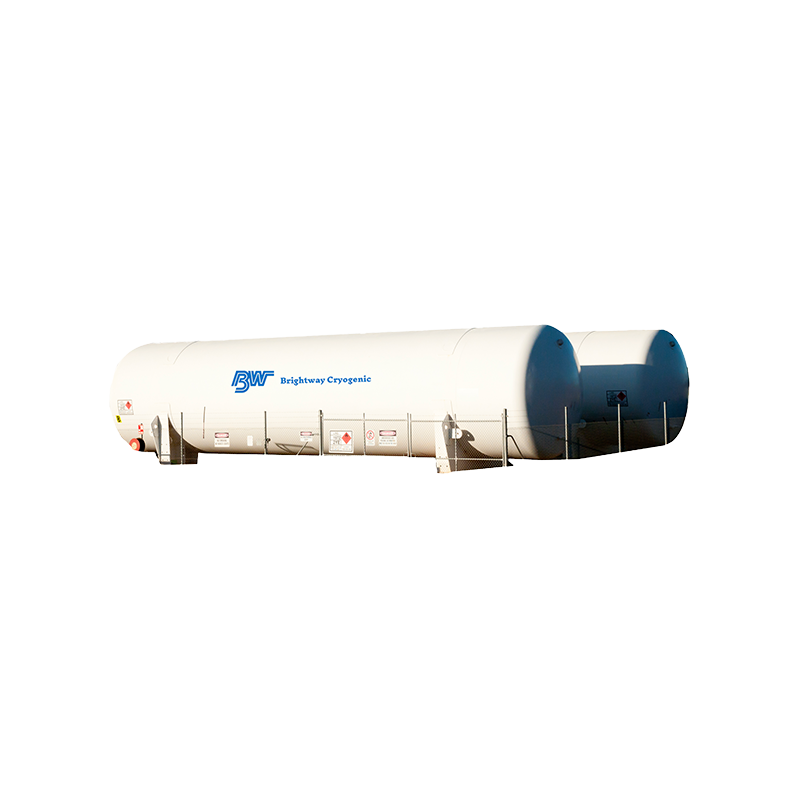
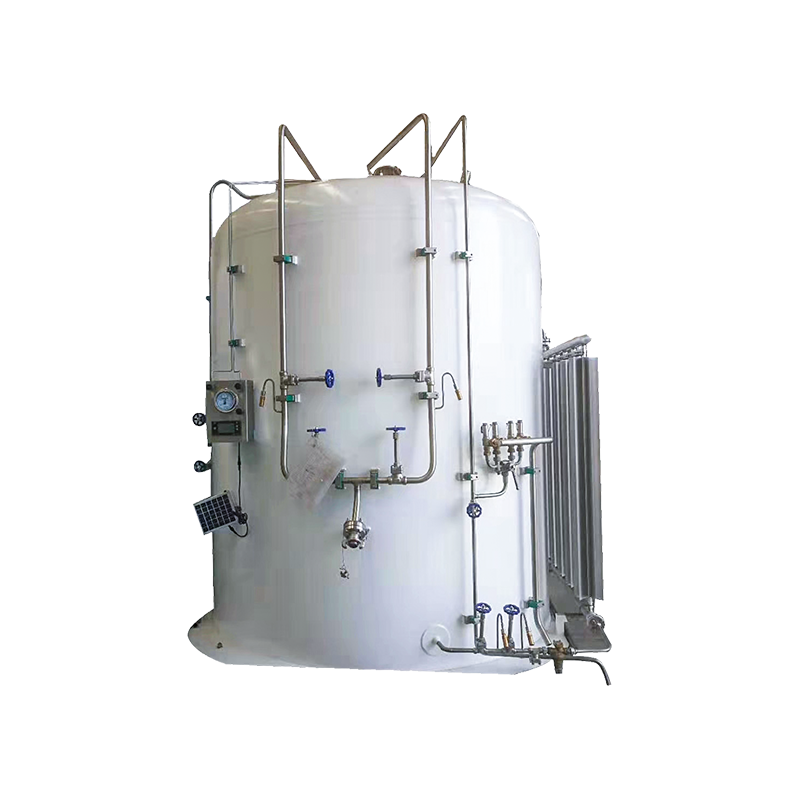
Liquid oxygen, liquid nitrogen or liquid argon is stored in a vacuum-insulated cryogenic tank. The tank helps maintain the extremely low temperature required to keep the gas in liquid form.
The liquid leaves the storage tank through the liquid outlet and enters the pump through the suction line. This line should be properly sized and kept as short and well insulated as practical. Excessive heat entering the piping can cause part of the cryogenic liquid to vaporize before reaching the pump.
An inlet filter is commonly installed to prevent particles or debris from entering the pump cold end. Depending on the system design, a return or pre-cooling line may also be provided to help cool the pump and remove vapor before normal operation begins.
Stable liquid supply is essential. If too much vapor enters the pump, filling efficiency may fall and the system may experience unstable pressure, vibration or abnormal noise.
Before startup, the pump cold end and connected piping are warmer than the cryogenic liquid. When the liquid first enters these components, it absorbs heat and begins to vaporize.
The system therefore requires a controlled pre-cooling period. Cryogenic liquid gradually cools the pump cold end, valves and inlet piping until conditions become suitable for stable liquid pumping.
Starting the pump too early can result in two-phase flow, in which both liquid and vapor are present inside the pump. This may cause poor suction, reduced capacity, pressure fluctuations and increased wear on valves and sealing components.
Pre-cooling should be confirmed according to the system design, temperature conditions and operating instructions—not simply by observing frost on the outside of the equipment.
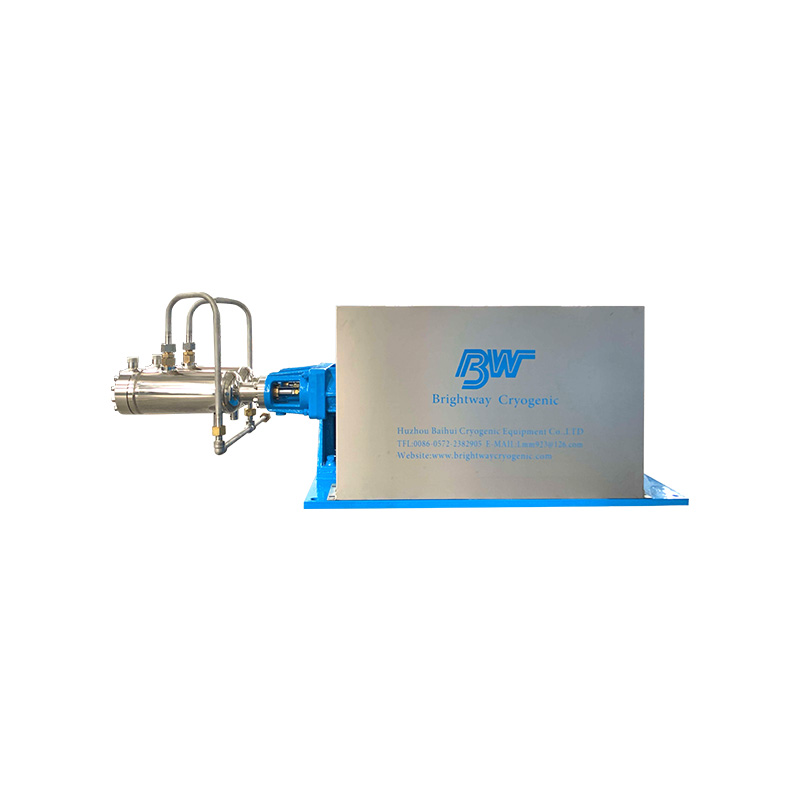
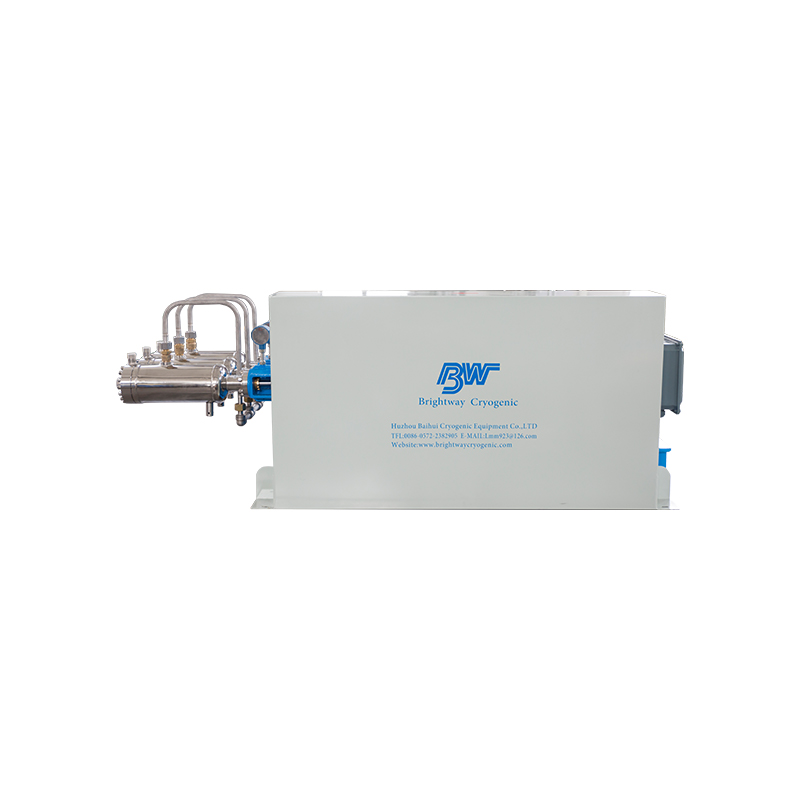
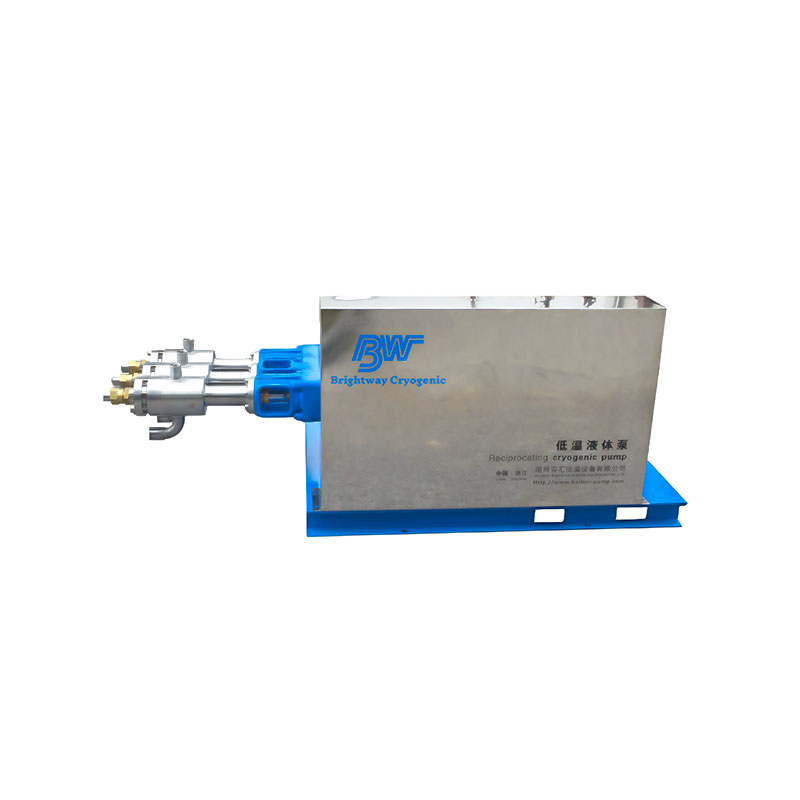
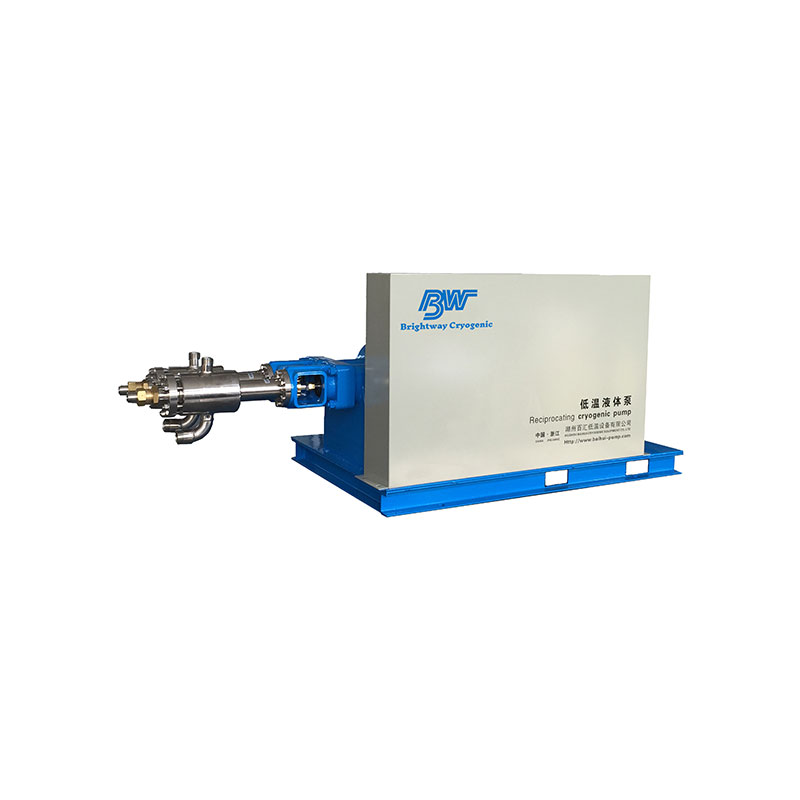
Industrial gas cylinder filling systems commonly use a reciprocating cryogenic pump because this type of pump can generate high discharge pressure at a relatively low or moderate flow rate.
During operation, the piston or plunger moves backward and draws cryogenic liquid into the cold end through the inlet valve. When it moves forward, the inlet valve closes and the liquid is pushed through the discharge valve.
This cycle repeats continuously, increasing the liquid to the pressure required by the downstream filling system.
Pressurizing the product while it is still a dense liquid allows the system to reach high gas pressure with a comparatively compact pump arrangement. Single-cylinder, duplex or triplex pump configurations may be selected according to the required capacity, pressure stability and operating pattern.
Because reciprocating pumps generate pulsating flow, the system may also include appropriate piping, controls or pulsation-management components to maintain stable downstream operation.
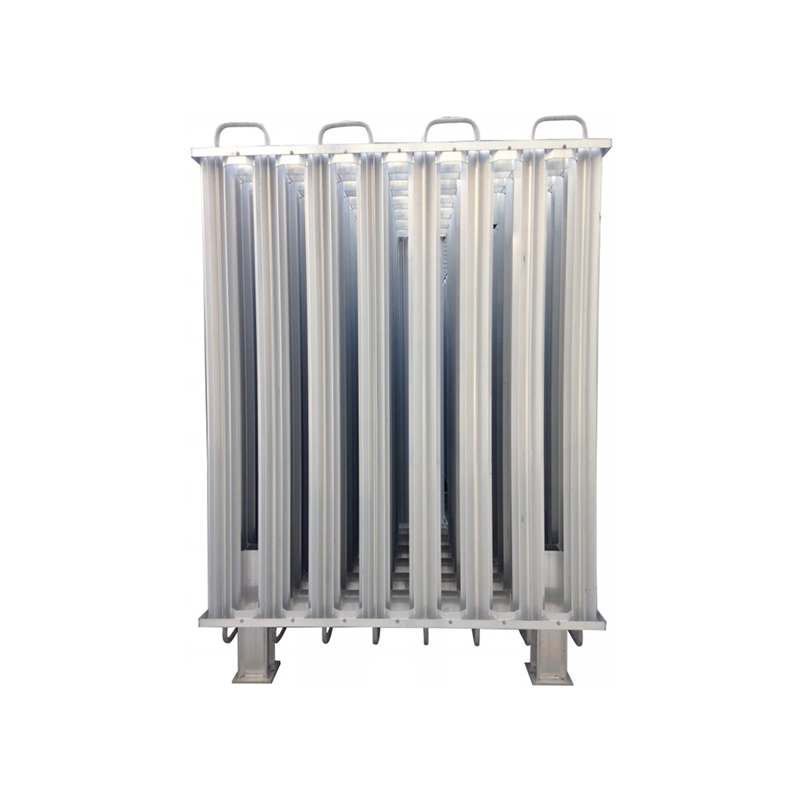
After leaving the pump, the high-pressure cryogenic liquid flows into a vaporizer. The vaporizer transfers heat to the liquid, converting it into gas and raising its temperature before it reaches the filling manifold.
Ambient air vaporizers use heat from the surrounding air and are widely used because they require no external heating power. However, their capacity can be affected by ambient temperature, humidity and frost accumulation.
Water-bath vaporizers use electrically heated water, steam or circulating hot water as the heat source. They are often considered when the system requires a more controlled outlet temperature, higher continuous capacity or stable performance under difficult ambient conditions.
The vaporizer must be correctly sized for the pump flow and operating cycle. If its capacity is insufficient, the outlet gas may remain too cold or may not be completely vaporized, affecting both filling performance and system safety.
After vaporization, the high-pressure gas passes through the downstream piping and enters the cylinder filling manifold.
The manifold distributes the gas to multiple filling positions. Valves, pressure gauges, safety devices and filling hoses are used to control and monitor the process. Some systems may also include a buffer vessel, pressure-control equipment or automatic filling controls, depending on the required production capacity and level of automation.
During filling, operators or the control system monitor pressure, gas temperature and cylinder condition. Filling should stop at the value specified by the applicable filling standard and operating procedure.
Because gas temperature affects the pressure inside a cylinder, the final filling result cannot be judged by pressure alone. The gas type, cylinder rating, filling temperature and applicable regulations must all be considered.
A typical industrial gas filling pump system may include:
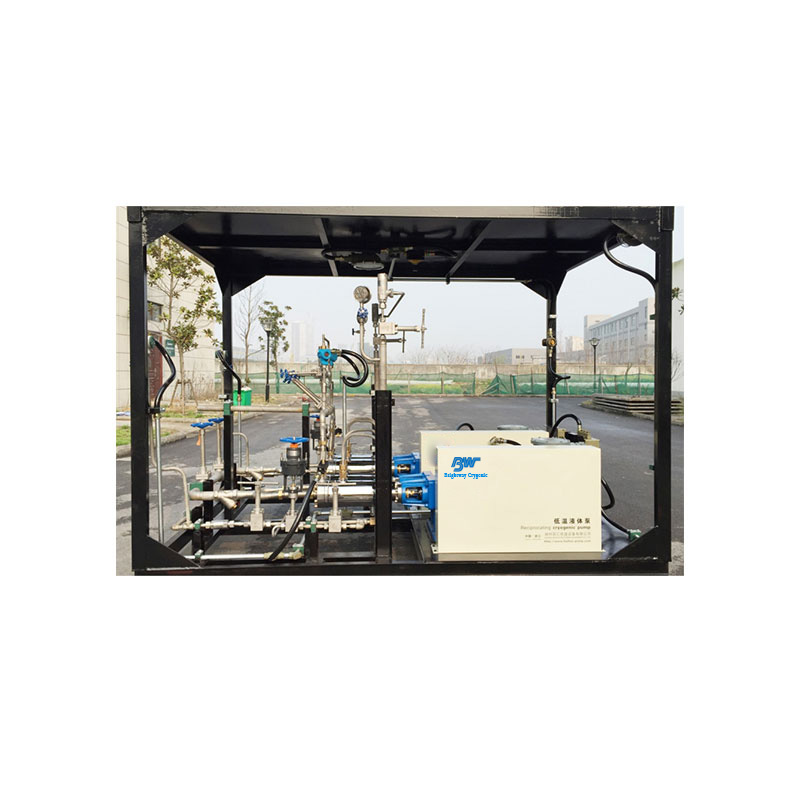
The system may be supplied as separate equipment or integrated into a skid-mounted package. A skid-mounted design can reduce on-site piping and installation work because the pump, vaporizer, valves, instruments and control components are assembled as one coordinated system.
The final scope should always be confirmed according to the customer’s storage tank, cylinder specifications, production requirements and site layout.
Many filling problems begin on the suction side rather than at the filling manifold.
If the suction pipe is too long, insufficiently insulated or contains unnecessary restrictions, the cryogenic liquid can absorb heat and form vapor. Low tank pressure, inadequate liquid level, a blocked filter or incomplete pump pre-cooling can create similar problems.
Possible operating symptoms include:
A larger pump does not automatically solve these problems. The tank pressure, suction piping, pre-cooling arrangement and complete system design must support the required pump capacity.
A pump system designed for one cryogenic liquid should not automatically be used for another without technical evaluation.
Liquid oxygen service requires strict control of cleanliness, materials and lubricant compatibility because oxygen can greatly accelerate combustion. Liquid nitrogen and liquid argon are inert, but they can displace oxygen and create an asphyxiation risk in enclosed areas.
Liquid carbon dioxide has different pressure and phase characteristics from cryogenic air gases, so its pump, piping and control arrangement must be selected specifically for CO₂ service.
The gas medium must therefore be confirmed before selecting the pump, seals, valves, vaporizer and safety devices.
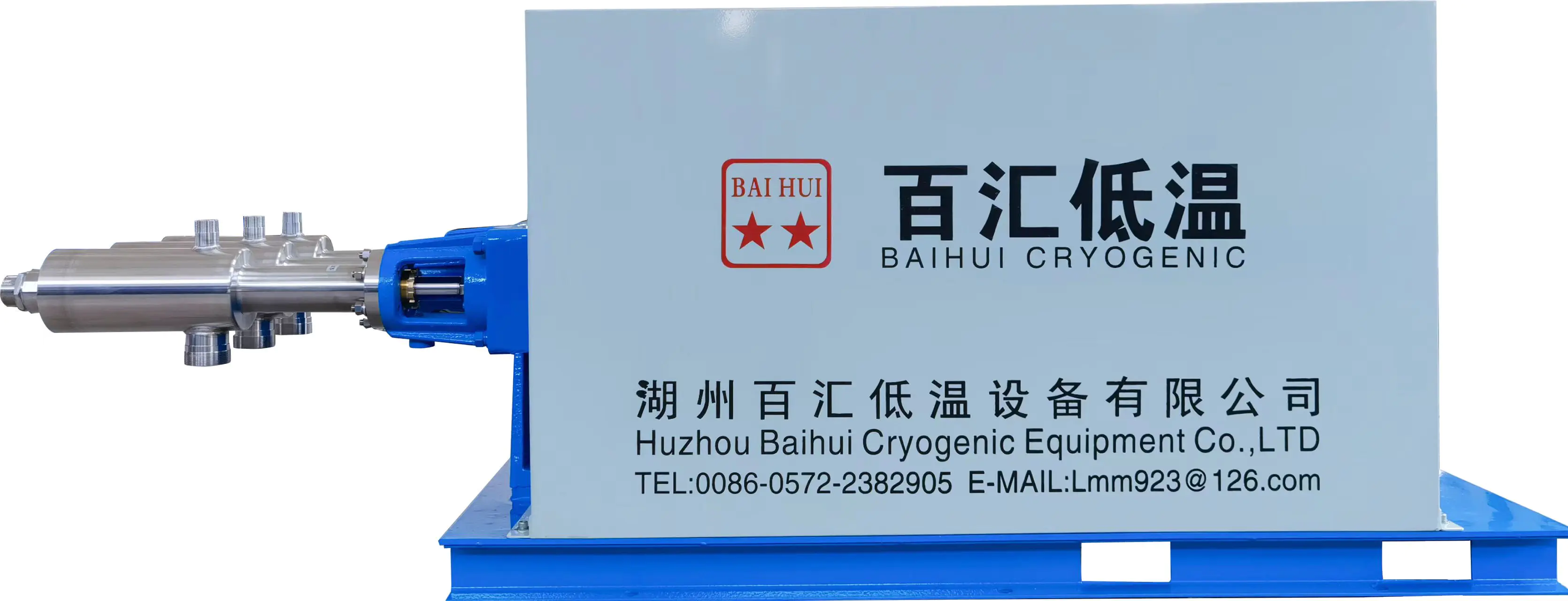
To recommend a suitable industrial gas filling pump system, the supplier normally needs the following information:
Providing complete operating data helps the manufacturer select not only the pump, but also the correct vaporizer capacity, piping size, control method and safety configuration.
The cryogenic pump is the central pressure-generating component, but reliable cylinder filling depends on the performance of the entire system.
The storage tank must provide a stable liquid supply. The pump must be correctly pre-cooled and matched to the required pressure and flow. The vaporizer must provide sufficient heat-transfer capacity, while the manifold and control system must manage the filling process safely.
When these components are properly selected and integrated, an industrial gas filling pump system can provide efficient and reliable filling for oxygen, nitrogen, argon, carbon dioxide and other applicable gases.
Huzhou Baihui Cryogenic Equipment Co., Ltd. supplies industrial gas filling pumps, cryogenic vaporizers and integrated pump systems for different filling requirements. By evaluating the gas medium, filling pressure, capacity, tank conditions and site layout, we help customers develop a system configuration suited to their actual application.
 Add: Building A38, China Energy Conservation and Environmental Protection Industrial Park, No. 1506, Yishan Road, Wuxing District, Huzhou City, Zhejiang Province, China
 Phone: +86-13757082585
Telphone: +86-572-2382905
 E-Mail: [email protected]
Copyright © Huzhou Baihui Cryogenic Equipment Co.,Ltd All Rights Reserved.

 English
 русский
 Español