
Baihui Cryogenic Equipment
Huzhou Baihui Cryogenic Equipment Co., Ltd
Huzhou Baihui Cryogenic Equipment Co., Ltd

Provide you with the latest enterprise and industry news
Cryogenic pumps work with liquids at extremely low temperatures and often operate under high discharge pressure. Thermal contraction, liquid vaporization, frequent start-stop cycles and unstable suction conditions can all accelerate wear.
A well-manufactured pump may still experience a short service life if it is incorrectly selected or operated. Conversely, correct installation, stable operating conditions and preventive maintenance can significantly improve reliability.
The following practices are especially important for reciprocating cryogenic pumps used with liquid oxygen, liquid nitrogen, liquid argon, LNG and other cryogenic liquids.
Extending pump life begins before installation.
The pump should be selected according to the actual liquid, required flow, discharge pressure, operating hours and start-stop frequency. A pump that is too small may need to run continuously at high speed, while an oversized pump may operate inefficiently or require frequent starting and stopping.
The manufacturer should be informed of:
The pump should operate within its specified pressure, speed and capacity range. Exceeding these limits can increase loads on the cold end, piston rings, valves, bearings and drive system.
Poor suction conditions are one of the most common causes of unstable performance and premature wear.
Cryogenic liquids are normally stored close to their boiling points. Heat entering the suction line or an excessive pressure drop can produce vapor before the liquid reaches the pump. The pump may then receive a mixture of liquid and vapor instead of a stable liquid supply.
This can lead to:
The suction pipe should be as short and direct as practical. Filters must be kept clean, insulation should remain in good condition, and unnecessary restrictions or high points that can trap vapor should be avoided.
Tank pressure and liquid level should also remain within the pump’s required inlet conditions.
A cryogenic pump should not be started while the cold end still contains warm gas.
Before startup, cryogenic liquid must be introduced gradually so that the pump and suction piping reach a stable low temperature. The return or vent line should remain open according to the approved operating procedure so that vapor can leave the system.
Starting too early may cause dry running or two-phase flow. It can also expose the cold-end components to rapid temperature changes and uneven thermal contraction.
A proper pre-cooling process helps protect:
The required pre-cooling time should be determined by the pump design and actual installation—not simply by waiting for a fixed number of minutes.
Higher pump speed does not always provide better production efficiency.
Operating above the recommended speed increases the number of piston strokes and valve cycles. This can accelerate wear of piston rings, valve springs, bearings and other moving parts.
Operators should also avoid:
If the required pressure or flow has changed, the pump and system configuration should be reviewed instead of forcing the existing pump to work outside its original design conditions.
Mechanical alignment directly affects the drive system and cold end.
The pump and motor should be correctly aligned, and the base frame must remain stable. Suction and discharge piping should be independently supported so that pipe weight and thermal contraction do not place excessive force on the pump connections.
During operation, regularly check:
Alignment should be rechecked after moving the equipment, replacing the motor, modifying the piping or carrying out major maintenance.
Serious pump damage is often preceded by small changes in operating condition.
Useful indicators include:
These changes should be investigated early. Replacing a worn part without identifying the cause may only provide a temporary solution.
For example, repeated piston-ring wear may be related to poor alignment, cylinder damage, excessive speed or unstable suction—not only the quality of the ring itself.
Maintenance should combine operating hours, actual equipment condition and the manufacturer’s recommendations.
Daily checks can cover leakage, frost, lubricant level, vibration, noise and instrument readings. Periodic maintenance should include the filter, valves, seals, belt or coupling, bearings, fasteners and electrical connections.
During a planned shutdown, internal wear parts should be inspected and measured. Maintenance findings should be recorded so that changes can be compared over time.
Replacing components during planned maintenance is usually more efficient than waiting for a failure that interrupts production.
Cold-end parts must match the pump model, liquid and operating pressure.
Components that look similar may have different materials, dimensions or pressure ratings. Incorrect piston rings, seals, valve springs or packing components can affect both pump performance and safety.
For liquid oxygen service, cleanliness is particularly important. Parts, tools and working surfaces must remain free from oil, grease, moisture and other contamination. Only materials and cleaning procedures approved for oxygen service should be used.
Spare parts should also be stored in clean, dry packaging to prevent contamination or damage before installation.
Pump protection does not end when production stops.
The pump should be shut down, isolated, depressurized, drained and purged according to the manufacturer’s manual and the site’s approved procedure. Trapped cryogenic liquid can expand as it warms, creating dangerous pressure inside isolated piping or equipment.
For extended shutdowns, moisture must be prevented from entering the cold end and piping. Moisture can freeze during the next startup and interfere with internal valves or flow passages.
The service life of a cryogenic pump depends on more than the cold end itself. The storage tank, suction piping, filter, drive mechanism, motor, instruments and operating procedure all influence pump reliability.
The most effective approach is to:
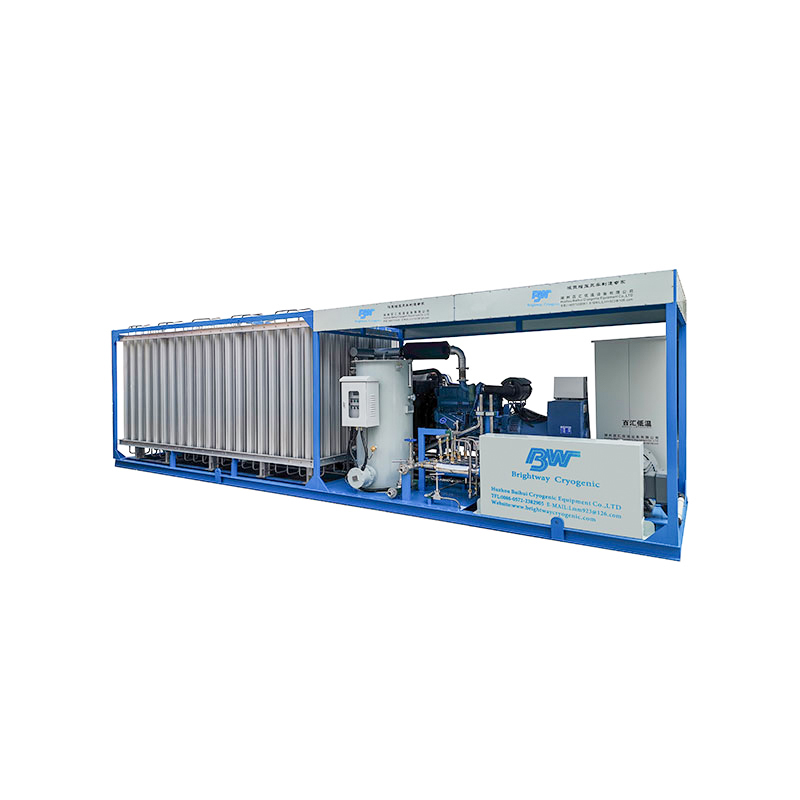
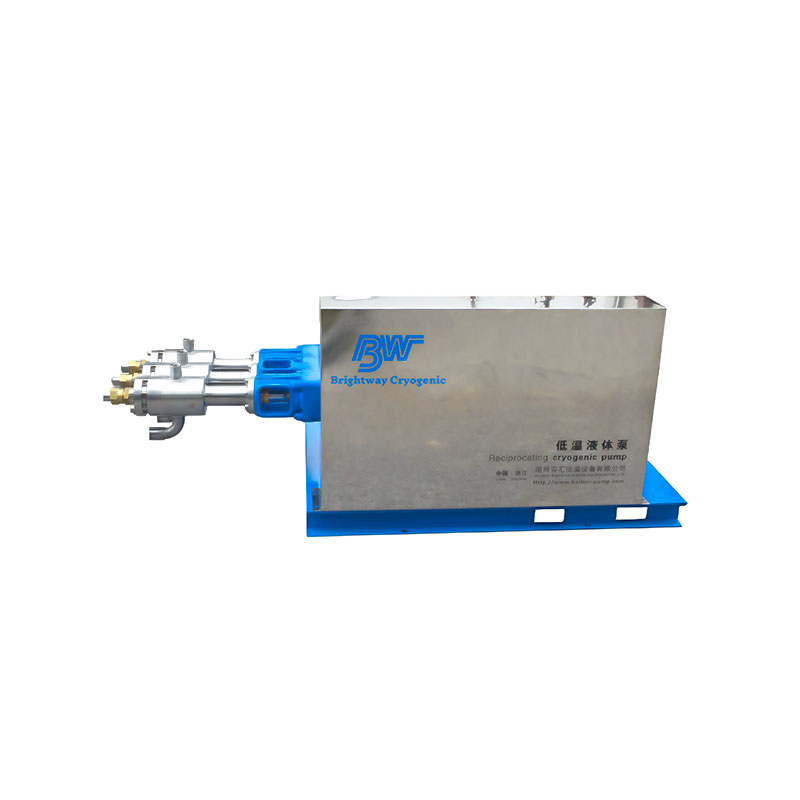
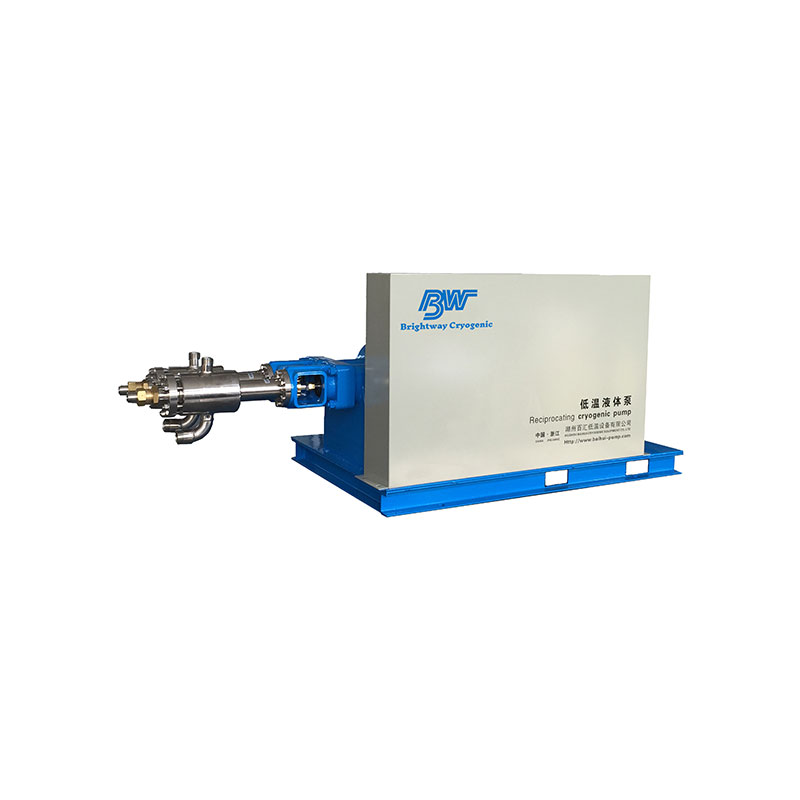
Brightway Cryogenic supplies reciprocating cryogenic pumps and integrated pump systems for industrial gas applications. Pump selection, system configuration and spare-parts recommendations can be provided according to the required liquid, pressure, flow and operating conditions.
 Add: Building A38, China Energy Conservation and Environmental Protection Industrial Park, No. 1506, Yishan Road, Wuxing District, Huzhou City, Zhejiang Province, China
 Phone: +86-13757082585
Telphone: +86-572-2382905
 E-Mail: [email protected]
Copyright © Huzhou Baihui Cryogenic Equipment Co.,Ltd All Rights Reserved.

 English
 русский
 Español