
Baihui Cryogenic Equipment
Huzhou Baihui Cryogenic Equipment Co., Ltd
Huzhou Baihui Cryogenic Equipment Co., Ltd

Provide you with the latest enterprise and industry news
Cryogenic pumps handle liquids at extremely low temperatures. Liquefied natural gas is typically stored at around -162°C, liquid oxygen at approximately -183°C, and liquid nitrogen at about -196°C. When a pump that has been standing at ambient temperature comes into contact with these liquids, the temperature difference can exceed 180°C.
This extreme difference creates a challenge that does not exist in ordinary water or oil pumping systems. Before a cryogenic pump can operate normally, its cold end, suction chamber and associated piping must be gradually cooled to a temperature close to that of the liquid being handled.
This process is known as pre-cooling, or pump cooldown. It is not simply a waiting period before startup. It is an essential step for establishing stable hydraulic conditions, protecting pump components and ensuring reliable cryogenic liquid delivery.
A pump at ambient temperature contains a considerable amount of stored heat. When the first small quantity of cryogenic liquid enters the pump, it absorbs this heat and boils rapidly.
Instead of remaining entirely in the liquid phase, part of the incoming fluid turns into vapor. The pump chamber may therefore contain a mixture of liquid and gas during the early stage of cooldown.
This vapor formation is normal while the pump is being pre-cooled. However, if the pump is started before the vapor has been sufficiently removed, it will attempt to pump an unstable two-phase mixture rather than a continuous column of liquid.
The result may include fluctuating discharge pressure, reduced flow, abnormal vibration, excessive noise and an inability to build the required pressure.
For a reciprocating cryogenic pump, vapor inside the cylinder can be compressed and expanded instead of being displaced as liquid. This greatly reduces volumetric efficiency and may cause irregular pressure pulsations.
In a centrifugal or submerged pump, vapor entering the impeller can interrupt liquid flow and reduce the head developed by the pump. In severe cases, the pump may lose its prime or fail to deliver liquid altogether.
One of the most important reasons for pre-cooling is to prevent cavitation.
Cryogenic liquids are often stored close to their saturation temperature. This means that even a relatively small temperature increase or pressure reduction can cause part of the liquid to vaporize.
As liquid passes through the suction valve, inducer or impeller inlet, its local pressure decreases. If this pressure falls below the liquid’s vapor pressure, vapor bubbles form. When the bubbles enter a higher-pressure region, they collapse rapidly.
Repeated bubble formation and collapse can produce vibration, unstable flow and localized impact on internal surfaces. Over time, this may damage valves, impellers and other wetted components. U.S. Department of Energy guidance on cryogenic liquid-hydrogen pumping similarly notes that vaporization can cause damaging cavitation in a pump.
Pre-cooling removes heat from the pump body and suction piping before operation begins. Once the internal metal surfaces are sufficiently cold, the incoming liquid absorbs much less heat and is more likely to remain in the liquid phase.
This helps establish adequate net positive suction head, commonly called NPSH, and gives the pump a more stable inlet condition.
A cryogenic pump does not have exactly the same internal dimensions at ambient temperature as it does at operating temperature.
Metals contract as they cool. Different components may also cool and contract at different rates because of variations in material, thickness, geometry and contact with the cryogenic liquid.
Pump designers account for this contraction when determining piston clearances, valve positions, seal arrangements, bearing fits and impeller clearances. The intended operating geometry is therefore reached only after the cold-end components have approached their normal cryogenic temperature.
If the pump begins moving while some components are still warm and others are already cold, the internal clearances may not yet be stable. This can increase friction, cause uneven contact and place additional loads on seals and wear parts.
Pre-cooling allows the pump structure to contract before it is subjected to normal operating speed and pressure. It helps bring the cold end into the mechanical condition for which it was designed.
Although pre-cooling is necessary, it must also be performed at a controlled rate.
Introducing a large volume of cryogenic liquid directly into a warm pump can cool the inner surfaces much faster than the outer structure. Thick sections such as flanges, cylinders, valve bodies and pipe connections may develop significant temperature gradients.
The colder portions contract first while the warmer portions resist this movement. This creates thermal stress within the material and around welds, joints and sealing surfaces.
Official cryogenic-system safety guidance warns that large temperature gradients during cooldown can create stresses that are not present during steady operation. It also notes that excessively rapid cooling can produce damaging radial temperature differences in thick-walled components. DOE Cryogenic System Safety Standard
For this reason, “fully pre-cooled” does not mean cooling the pump as quickly as possible. It means following the specified cooldown sequence so that heat is removed gradually and vapor can leave the pump through the designed return or vent path.
Stable liquid flow also helps protect the pump’s internal components.
When a warm pump contains large quantities of vapor, the fluid density is much lower than expected. The vapor may not provide the same cooling effect as liquid around valves, piston rings, seals, impellers and other wear parts.
Starting under these conditions can create localized heating and dry-running-like behavior. In reciprocating pumps, vapor in the cylinder may cause irregular loading of the piston and valves. In centrifugal pumps, two-phase flow can create unstable forces on the impeller and shaft.
This is why cryogenic pump systems often use temperature sensors in the cooldown return line, suction area or cold end. Cryogenic-pump manufacturers also offer cooldown temperature probes and anti-cavitation monitoring as protection features, showing that temperature and liquid condition are critical startup parameters. Cryostar Cryogenic Pump Datasheet
There is no universal pre-cooling time that applies to every cryogenic pump.
The required time depends on the cryogenic liquid, pump type, cold-end mass, piping arrangement, insulation quality, tank pressure, liquid level and ambient conditions. A pump that has been idle for several days may also require a different cooldown period from one that has remained in cold standby.
For this reason, operators should not determine readiness only by waiting for a fixed number of minutes.
Complete pre-cooling is normally confirmed through the conditions specified by the pump manufacturer and the site operating procedure. These may include stabilization of the cold-end or return-line temperature, continuous liquid arrival, removal of trapped vapor, stable suction pressure and an appropriate temperature difference between the pump and the incoming liquid.
Visible frost on the outside of a pipe or pump is not reliable proof that the internal flow path is completely cold. The outside surface may appear cold while warm areas or vapor pockets remain inside the system.
Pre-cooling and priming are also related but not identical. Pre-cooling removes stored heat from the equipment, while priming ensures that the required internal volume is filled with liquid and free from disruptive gas pockets. Both conditions may need to be satisfied before startup.
Pre-cooling consumes time and may produce some boil-off gas, but skipping or shortening the process rarely saves operating cost.
An unsuccessful warm start can waste more cryogenic liquid, extend commissioning time and increase wear on valves, seals and other internal components. Repeated cavitation or thermal cycling may also shorten pump service life and lead to unplanned maintenance.
Proper pre-cooling helps the pump establish liquid-filled suction, stable internal clearances and predictable discharge performance from the beginning of operation. It is therefore an important part of pump reliability rather than a simple startup formality.
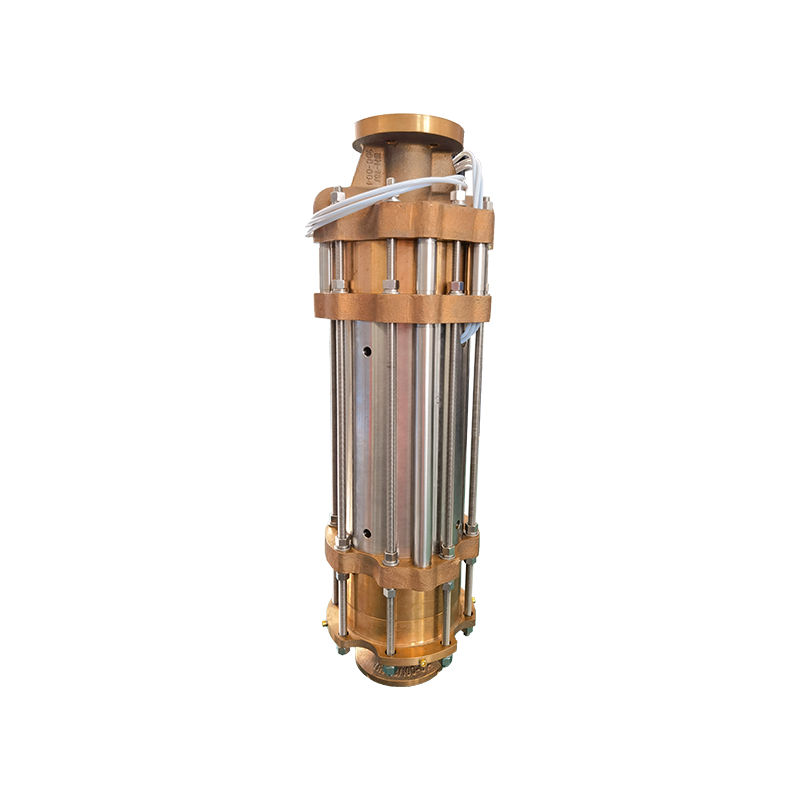
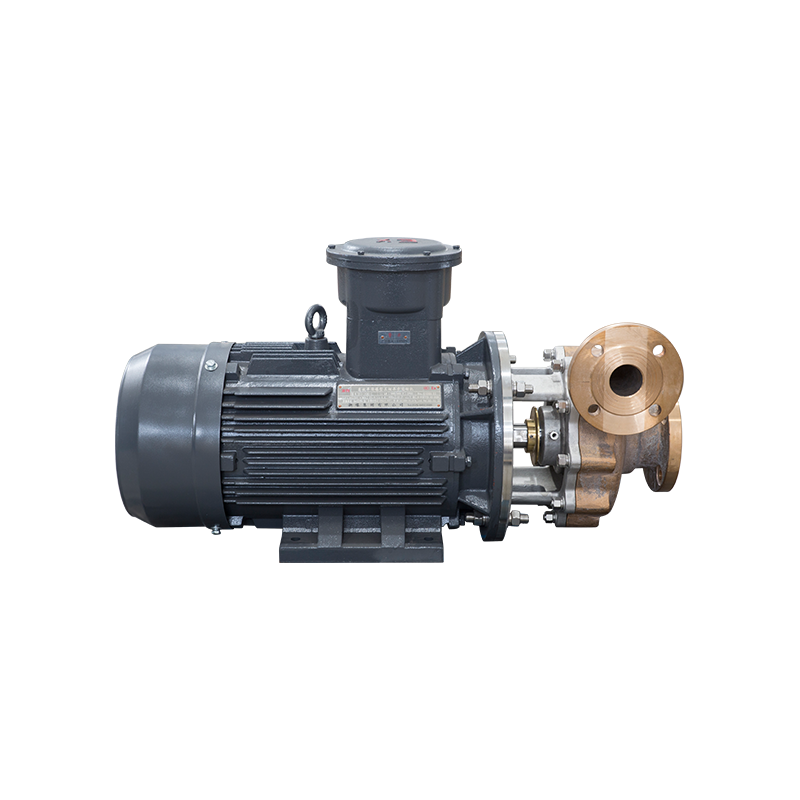
Huzhou Baihui Cryogenic Equipment Co., Ltd. specializes in the design and manufacture of cryogenic liquid pumps, including L-CNG high-pressure reciprocating pumps, LNG submerged pumps, cryogenic centrifugal pumps, industrial gas filling pumps and integrated skid-mounted systems. Actual cooldown requirements should always be determined according to the selected pump, process medium, system design and approved operating procedure.
 Add: Building A38, China Energy Conservation and Environmental Protection Industrial Park, No. 1506, Yishan Road, Wuxing District, Huzhou City, Zhejiang Province, China
 Phone: +86-13757082585
Telphone: +86-572-2382905
 E-Mail: [email protected]
Copyright © Huzhou Baihui Cryogenic Equipment Co.,Ltd All Rights Reserved.

 English
 русский
 Español