
Baihui Cryogenic Equipment
Huzhou Baihui Cryogenic Equipment Co., Ltd
Huzhou Baihui Cryogenic Equipment Co., Ltd

Provide you with the latest enterprise and industry news
Cryogenic pumps operate under conditions that are very different from those of conventional liquid pumps. Extremely low temperatures, rapid temperature changes, liquid vaporization and high discharge pressures can all influence pump reliability.
Routine maintenance is therefore not limited to replacing piston rings or tightening a seal. It should cover the pump, the drive system, the inlet conditions, the instrumentation and the connected piping.
This article mainly focuses on reciprocating cryogenic pumps used for liquid oxygen, liquid nitrogen, liquid argon, LNG and other cryogenic liquids. Some inspection principles also apply to centrifugal cryogenic pumps, but the maintenance procedure and service interval must always follow the pump manufacturer’s manual.
Before performing maintenance, the pump must be stopped and properly isolated from the cryogenic liquid supply and discharge system.
The equipment should be depressurized, drained, warmed and purged according to the site’s approved operating procedure. Never loosen a connection or dismantle a cold end while pressure may still be trapped inside the pump or piping.
For pumps handling liquid oxygen, cleanliness is especially important. Components, tools and replacement parts must be suitable for oxygen service and kept free from oil, grease, moisture and other contamination.
Maintenance involving the cold end, pressure-containing components or electrical system should only be carried out by trained personnel.
Before dismantling any component, review how the pump has been operating.
Useful information includes:
A single pressure reading provides limited information. A trend showing that discharge pressure is gradually falling or motor current is steadily increasing is much more useful for identifying developing wear.
The cold end is the part of the pump that comes into direct contact with the cryogenic liquid. It normally contains the cylinder or liner, piston or plunger, piston rings, packing, suction valve and discharge valve.
During daily operation, begin with an external visual inspection.
Check for unusual frost, localized icing, visible leakage or a frost pattern that has changed since the previous inspection. Frost on the cold process section can be normal, but frost spreading toward the warm drive end may indicate an insulation problem, seal leakage or excessive heat transfer.
If the cold end uses a vacuum jacket, unusual surface sweating or widespread frosting may suggest deterioration of the vacuum insulation. Pumps equipped with a vacuum-monitoring connection should be checked according to the manufacturer’s instructions.
The vacuum jacket should not be opened or adjusted as part of an ordinary daily inspection.
Packing and seals prevent cryogenic liquid or cold vapor from moving toward the drive mechanism.
Inspect the packing area, drain or vent connection, flanges and threaded joints for signs of leakage. A small change in leakage rate can be an early indication of packing wear, incorrect compression, piston misalignment or surface damage.
Packing should not be tightened repeatedly without investigating the cause of the leakage. Excessive tightening may increase friction, generate heat and accelerate wear of the piston rod or packing components.
During a planned shutdown, inspect the packing, scraper rings, guide rings and O-rings. Replace them when their dimensions, surface condition or sealing performance no longer meet the manufacturer’s requirements.
The piston assembly creates the displacement required to build pressure. Piston rings and wear rings help maintain the correct clearance between the piston and cylinder.
Worn rings can allow internal leakage from the high-pressure side to the low-pressure side. Typical symptoms include reduced capacity, difficulty building pressure, unstable discharge pressure and longer filling time.
During scheduled cold-end maintenance, inspect the piston and cylinder for scoring, uneven wear, deposits or dimensional changes. Clearances should be measured rather than judged only by appearance.
If piston rings wear repeatedly within a short operating period, replacing the rings alone may not solve the problem. The cylinder condition, alignment, suction conditions and operating speed should also be checked.
The suction and discharge valves have a direct influence on volumetric efficiency and pressure stability.
A valve may fail to close correctly because of contamination, seat damage, spring fatigue, wear or ice formation caused by moisture entering the system. Valve leakage can produce reverse flow, pressure pulsation, lower capacity or abnormal valve noise.
During a planned inspection, examine the valve seat, poppet or plate, spring and sealing surfaces. Cleaning, lapping or replacement should only be performed according to the pump design and manufacturer’s tolerances.
Valve components from different models should not be mixed, even when their external dimensions appear similar.
A clean suction filter is essential for protecting the cold end. However, a blocked filter can also create excessive pressure loss before the pump.
Because cryogenic liquids operate close to their boiling points, even a relatively small pressure drop can promote vapor formation. The pump may then receive a mixture of liquid and vapor, resulting in unstable flow, pressure fluctuation and cavitation-like noise.
Inspect the filter for contamination and clean or replace it at the specified interval. The actual interval depends on liquid cleanliness, operating frequency and site conditions.
The suction system should also be checked for:
Maintenance should treat the storage tank, suction line and pump as one connected system.
The drive end converts motor rotation into reciprocating piston movement. Depending on the design, it may include a crankshaft, connecting rod, crosshead, bearings, guides and an oil- or grease-lubrication system.
Check the lubricant level and condition at the required interval. Discoloration, metal particles, water contamination or an unusual odor can indicate internal wear or contamination.
Bearing temperature, crankcase temperature, noise and vibration should be compared with the pump’s normal operating condition. A gradual increase may indicate insufficient lubrication, bearing wear, misalignment or excessive mechanical load.
During scheduled maintenance, inspect the bearings, crosshead, connecting rod, guide surfaces and wear bands. Internal clearances and tightening torques should follow the manufacturer’s specifications.
Lubricants must never be allowed to contaminate components intended for oxygen service.
For belt-driven pumps, inspect belt condition, tension and pulley alignment. Cracks, glazing, uneven wear or belt dust may indicate incorrect tension or misalignment.
A loose belt can reduce pump speed and capacity. Excessive belt tension can increase the load on motor and crank-drive bearings.
For directly coupled pumps, inspect the coupling, fasteners and alignment. Alignment should also be rechecked after moving the pump, replacing the motor, changing piping or carrying out major maintenance.
All guards must be correctly installed before the pump is returned to service.
Monitor motor current, temperature, noise and vibration. A change in motor current can provide an early warning of increased mechanical resistance, abnormal discharge pressure or electrical imbalance.
Inspect terminals, grounding connections, cable condition, local control boxes and emergency-stop devices. If the pump is controlled by a variable-frequency drive, confirm that the speed limits, acceleration settings and protective parameters have not been changed without authorization.
Electrical inspection and testing must be performed by qualified personnel.
Pressure gauges, transmitters, temperature sensors and flow instruments are necessary for evaluating pump condition. An inaccurate gauge can make a healthy pump appear defective—or hide an actual problem.
Check instruments for physical damage, loose connections, blocked impulse lines and unrealistic readings. Calibration intervals should be based on the instrument manufacturer’s requirements and the site’s quality system.
Relief valves, interlocks, alarms and shutdown devices must also be included in the maintenance program. Visual inspection alone is not sufficient; periodic functional testing is required according to the applicable procedure.
Never isolate or adjust a safety device simply to keep the pump running.
Inspect the base frame, anchor bolts, pump mounting bolts and cold-end-to-drive connection.
Loose foundations can increase vibration and accelerate wear. Cracked welds, corrosion or movement marks around bolts should be investigated before operation continues.
The connected piping must not place excessive external load on the pump. If a pipe moves when a flange is loosened, the installation may contain piping stress or misalignment.
Pipe supports, flexible sections, drains and insulation should therefore be included in the routine inspection.
Not every component needs to be dismantled every day. A practical program can be divided into three levels.
Before each start or operating shift: Check leakage, frost pattern, lubricant level, valve position, instrument readings, motor condition, guards and unusual noise or vibration.
Periodic inspection: Review the filter, belt or coupling, fasteners, electrical connections, piping supports, vibration trend and instrument condition. The interval may be weekly or monthly depending on operating duty.
Planned shutdown maintenance: Inspect internal valves, packing, piston rings, cylinder, bearings, crosshead and other wear parts. Test safety devices and replace components based on measured condition, running hours and manufacturer recommendations.
A fixed maintenance interval cannot be applied to every pump. The correct schedule depends on the pump model, pumped liquid, operating pressure, speed, start-stop frequency and suction conditions.
Maintenance should be brought forward when any of the following changes are observed:
Continuing to operate under these conditions may turn a small maintenance issue into damage to the cold end or drive system.
Effective cryogenic pump maintenance is based on observation, measurement and correct service records. The cold end is important, but it should never be inspected separately from the suction system, drive mechanism, motor, piping and safety devices.
The best maintenance program does not replace parts simply because the pump has reached a certain number of hours. It combines the manufacturer’s recommended interval with actual operating conditions and condition trends.
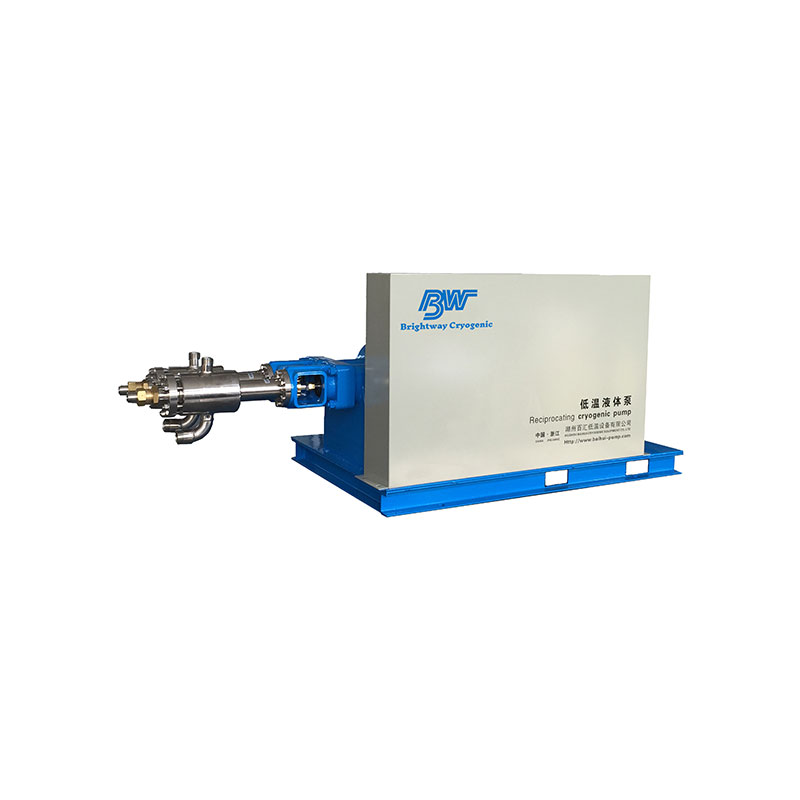
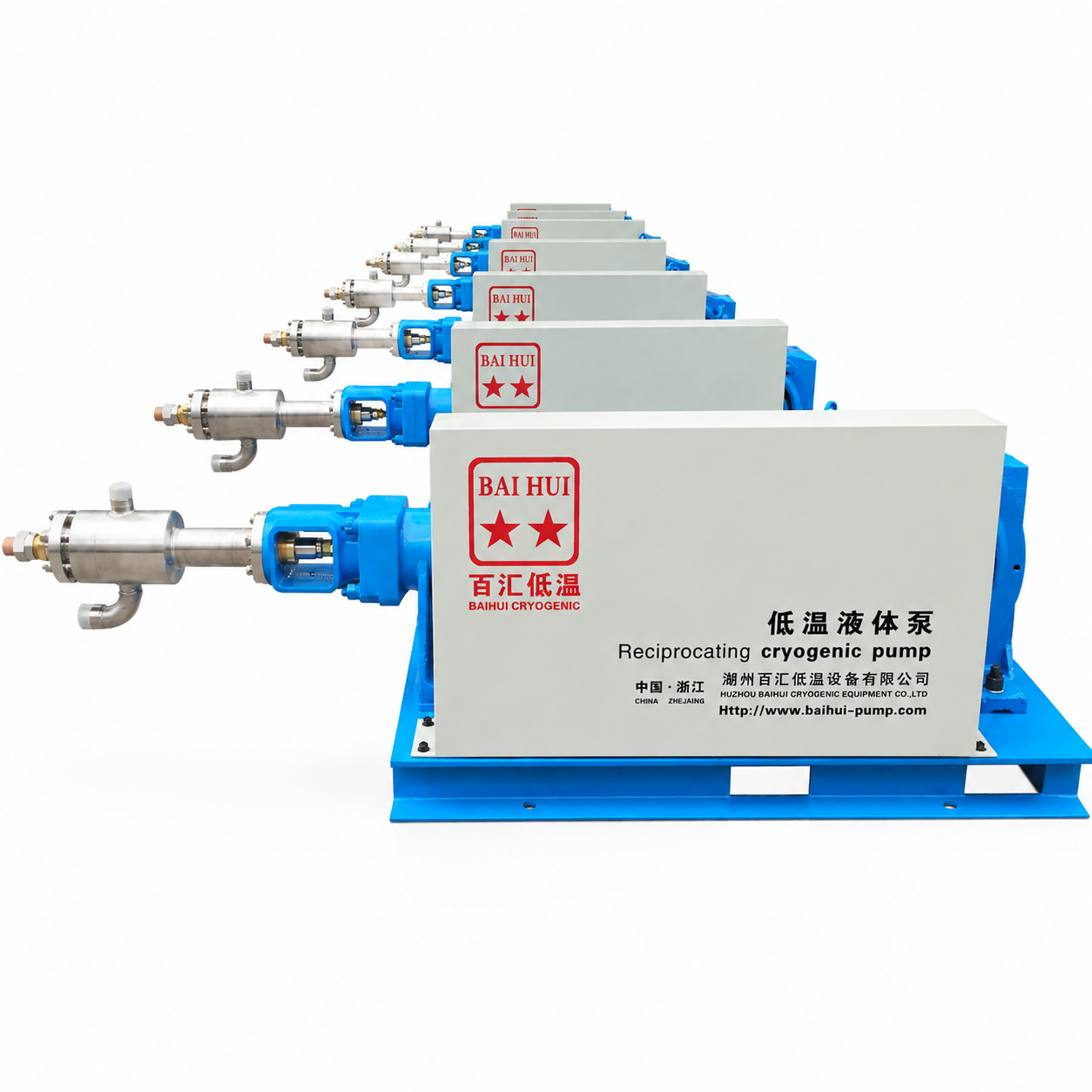
Brightway Cryogenic supplies reciprocating cryogenic pumps and integrated pump systems for industrial gas applications. Pump configuration, spare-parts selection and maintenance recommendations can be provided according to the operating liquid, pressure, flow and service conditions of each installation.

 Add: Building A38, China Energy Conservation and Environmental Protection Industrial Park, No. 1506, Yishan Road, Wuxing District, Huzhou City, Zhejiang Province, China
 Phone: +86-13757082585
Telphone: +86-572-2382905
 E-Mail: [email protected]
Copyright © Huzhou Baihui Cryogenic Equipment Co.,Ltd All Rights Reserved.

 English
 русский
 Español