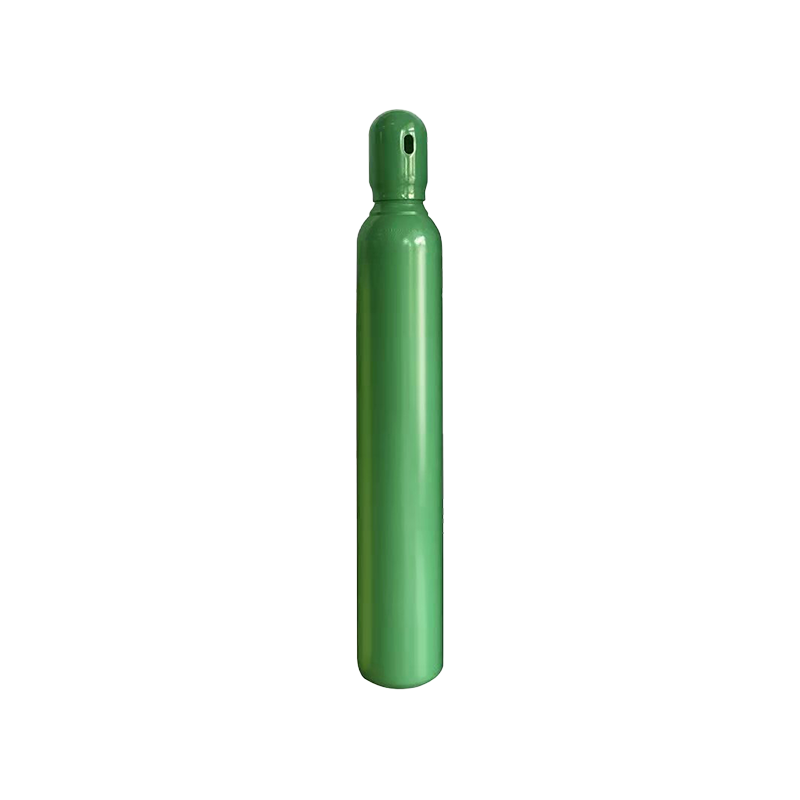
Custom Gas cylinder

Preferred by our customers

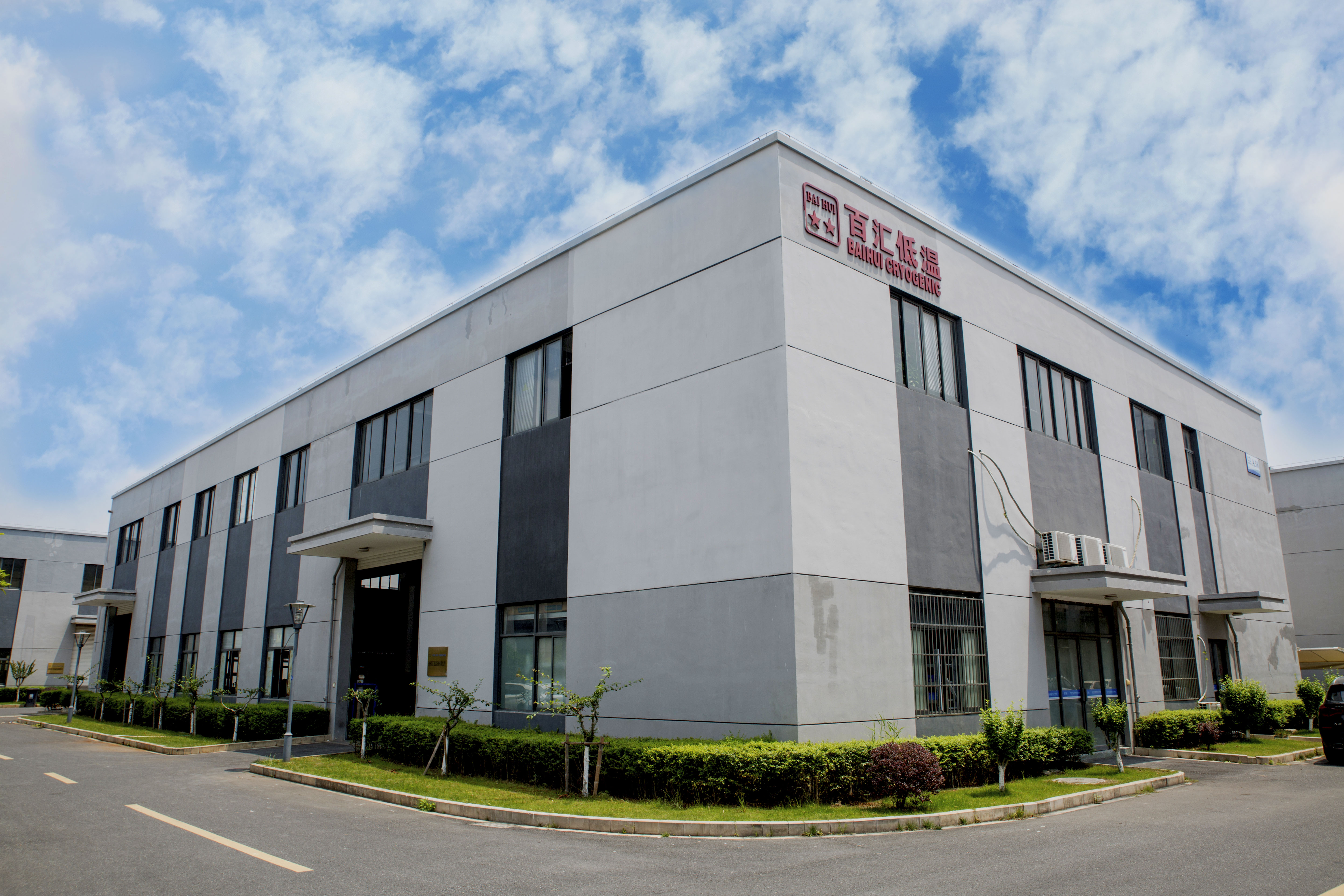
Huzhou Baihui Cryogenic Equipment Co., Ltd

Guarantee High Quality With Our Expertise

Since its establishment, our company has been focusing on the design, production, sales and service of the various cryogenic liquid pumps in the industrial gases and gas industry. The company has strong technical and advanced production equipment. It has a group of senior designers and excellent employees specializing in the design and manufacture of gas and gas equipment.Now the company is professional China Gas cylinder Factory and Gas cylinder company in China. Our Main Products: L-CNG High Pressure Reciprocating Pump、LNG Submersible Pump、Industrial Gas Filling Pump、Cryogenic Centrifugal Pump、Cryogenic Liquid Vaporizer、 LNG/L-CNG Skid Equipment、Vehicle-Mounted High Pressure Liquid Nitrogen Pump Skid (Pump Truck)、Industrial Gases Pressure Regulator Device Systems and other products.

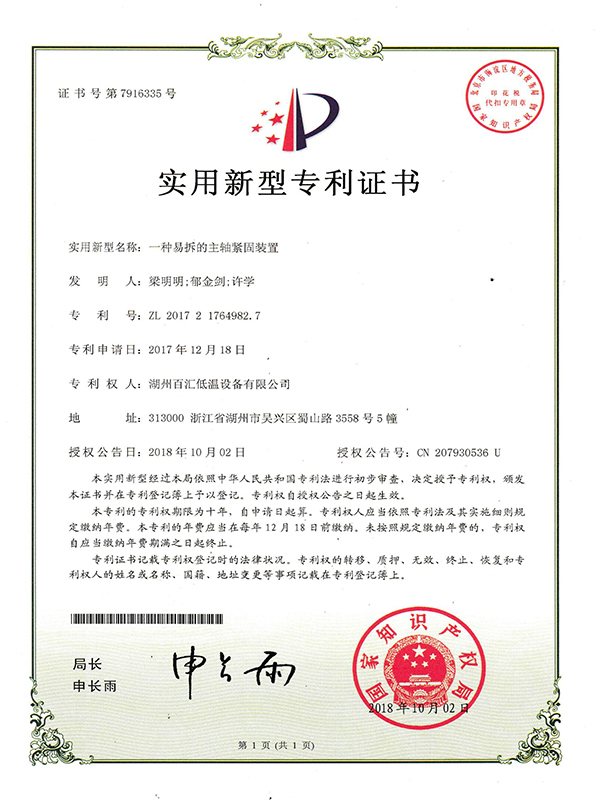
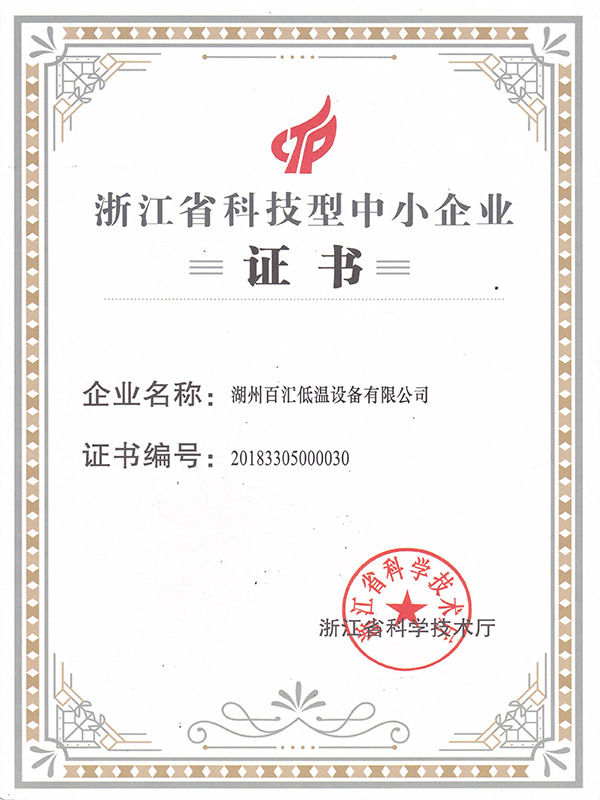
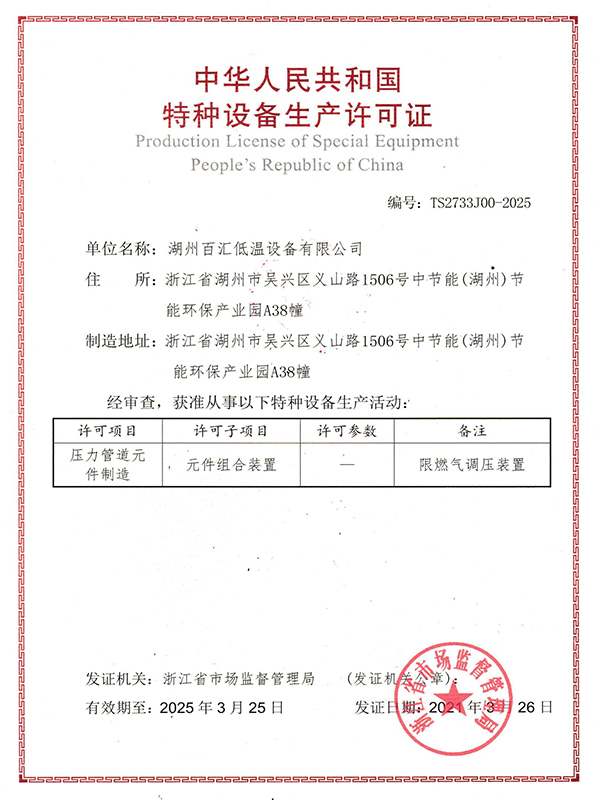
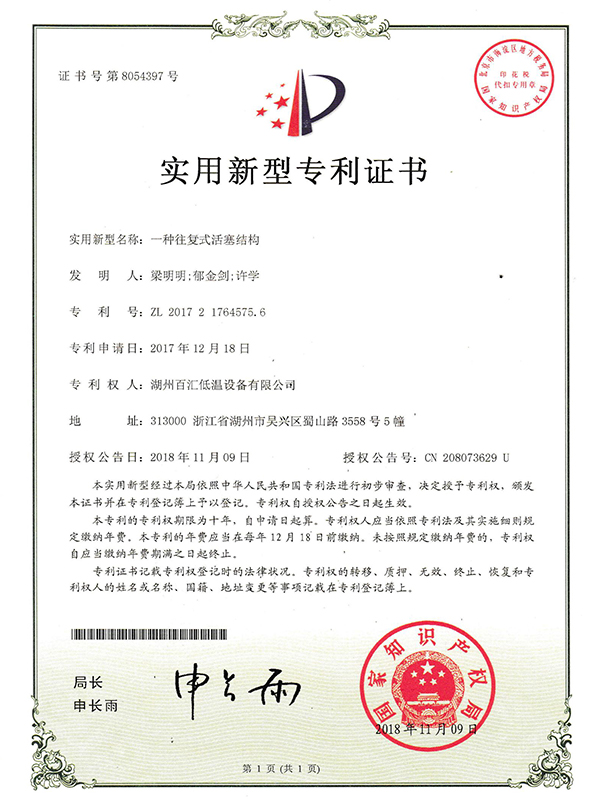
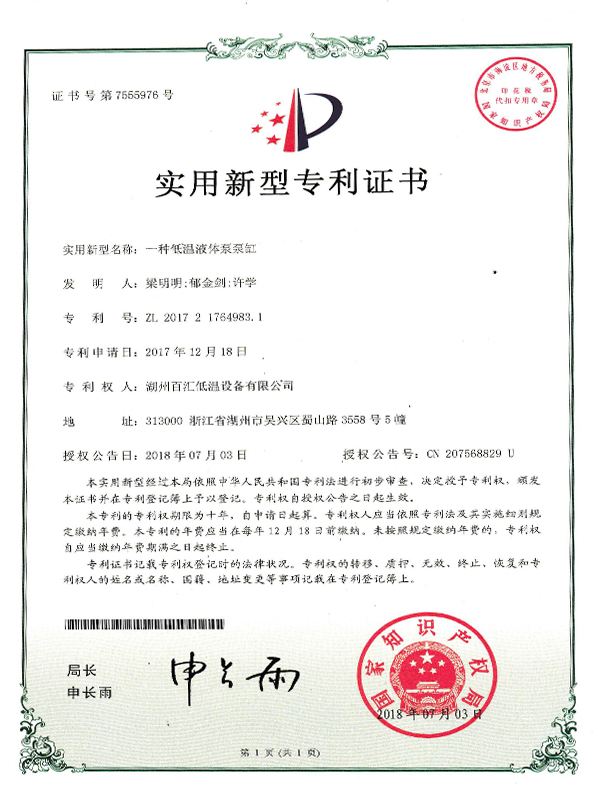
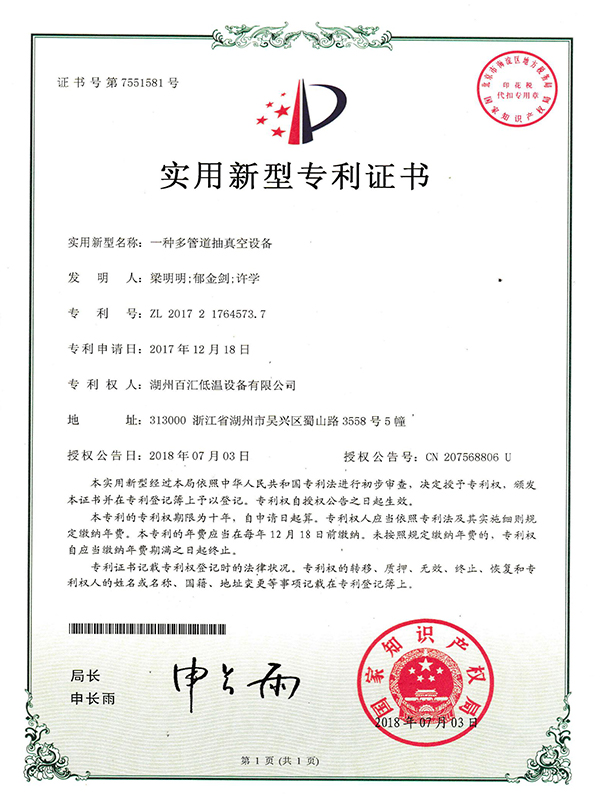
Honor

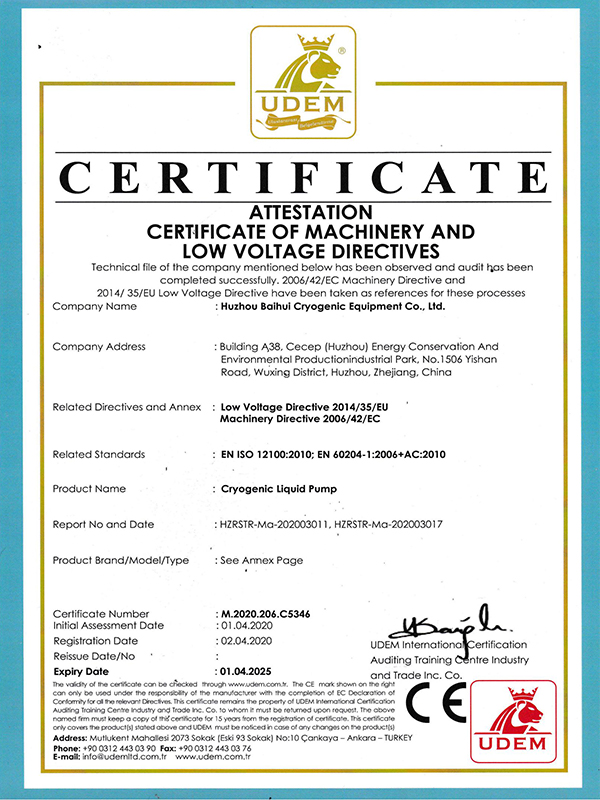
Honor certificate
Honor certificate
Honor certificate
Honor certificate
Honor certificate
Honor certificate
Honor certificate

News

Cryogenic Transfer Hoses: What Should Be Checked Before Every Transfer?

Cryogenic transfer systems often receive attention for their pumps, tanks, valves and control equipment. However, the flexible hose connecting a tanker, storage vessel or pump skid...

From Cryogenic Liquid to High-Pressure Cylinders: How an Oxygen, Nitrogen and Argon Filling Pump Skid Works

Industrial gas filling stations need more than a cryogenic pump. They require a coordinated system that can pressurize cryogenic liquid, vaporize it efficiently and deliver the gas...

Cryogenic Centrifugal Pump Unloading Skid with a Standard Electrical Control Panel

Transferring cryogenic liquids from a tanker or storage container is not simply a matter of installing a pump. The pump, piping, valves, instruments, electrical controls and suppor...

How to Extend the Service Life of a Cryogenic Pump

Cryogenic pumps work with liquids at extremely low temperatures and often operate under high discharge pressure. Thermal contraction, liquid vaporization, frequent start-stop cycle...

Which Parts of a Cryogenic Pump Should Be Checked During Routine Maintenance?

Cryogenic pumps operate under conditions that are very different from those of conventional liquid pumps. Extremely low temperatures, rapid temperature changes, liquid vaporization...

Why Is Cryogenic Pump Flow or Pressure Unstable?

Stable flow and discharge pressure are important indicators of correct cryogenic pump operation. When the pressure gauge fluctuates, the flow rate decreases or the pump repeatedly ...

How Does an Industrial Gas Cylinder Filling Pump System Work?

Industrial gases such as oxygen, nitrogen and argon are often stored as cryogenic liquids because the liquid form occupies much less space than the same product in gaseous form. Ho...

Reciprocating, Centrifugal or Submerged: Which Cryogenic Pump Should You Choose?

Selecting a cryogenic pump is not simply a matter of choosing a model with the required motor power or connection size. The correct pump must match the liquid, required discharge p...

Why Must a Cryogenic Pump Be Fully Pre-Cooled Before Startup?

Cryogenic pumps handle liquids at extremely low temperatures. Liquefied natural gas is typically stored at around -162°C, liquid oxygen at approximately -183°C, and liquid nitrogen...

Cryogenic Pump Cavitation: Causes, Effects and Solutions

Cryogenic pumps are widely used to transfer liquid nitrogen, liquid oxygen, liquid argon, LNG, and other low-temperature liquids. Because these fluids remain in liquid form only un...

What Is a Cryogenic Pump? Working Principle, Types and Applications

Introduction Cryogenic pumps are essential components in industries where liquefied gases need to be transferred, pressurized, and supplied reliably under extremely low-temperature...

See You Next Year at IG China 2027

As IG China 2026 comes to a successful close in Hangzhou, Brightway Cryogenic would like to sincerely thank all customers, partners, industry professionals, and friends who visited...

Industry knowledge


What is a gas cylinder?
A gas cylinder is a container designed to store and transport compressed gases. These cylinders are typically made of high-strength materials such as steel, aluminum, or composite materials, and are used for a wide variety of applications including industrial, medical, and scientific purposes.
Gas cylinders are filled with different types of gases, including oxygen, nitrogen, helium, carbon dioxide, and propane, among others. The gas is compressed inside the cylinder to a high pressure, which allows it to be stored in a relatively small space.
The cylinders have a valve on top that can be opened to release the gas. To ensure safety, gas cylinders are designed and manufactured to withstand high pressures and must be periodically inspected and tested to ensure they remain in good condition.
Proper handling and storage of gas cylinders are also essential to prevent accidents and ensure the safety of those around them. This includes keeping cylinders away from heat sources and flame, storing them in a vertical position with their caps securely in place, and using appropriate handling equipment such as cylinder carts or cradles.


What is the purpose of gas cylinder?
A gas cylinder is a container that is designed to store and transport gases at high pressure. Gas cylinders are commonly used for a variety of purposes, including:
Storage and transport of compressed gases: Gas cylinders are used to store and transport compressed gases, such as oxygen, helium, nitrogen, and propane.
Welding and cutting: Gas cylinders are used for welding and cutting applications, where a high-temperature flame is needed to melt or cut metal.
Medical purposes: Gas cylinders are used to store and transport medical gases, such as oxygen and nitrous oxide, for use in hospitals and other healthcare facilities.
Industrial and commercial applications: Gas cylinders are used in a variety of industrial and commercial applications, such as powering forklifts and other machinery, inflating tires, and fueling vehicles.
The purpose of gas cylinders is to provide a safe and reliable way to store and transport gases at high pressure, making them available for a variety of different applications.

How to use the gas cylinder?
Using a gas cylinder can be dangerous if not done correctly. It is important to follow safety precautions and the manufacturer's instructions carefully. Here are some general steps on how to use a gas cylinder:
Inspect the cylinder: Before using the cylinder, check it for any signs of damage or wear, such as dents, cracks, or rust. Make sure the cylinder valve is closed and the cylinder is stored in a cool, dry, and well-ventilated area.
Connect the regulator: Attach the regulator to the cylinder valve, making sure it is properly aligned and tightened. Use a wrench to tighten the regulator nut.
Adjust the pressure: Turn the regulator knob to adjust the pressure to the level recommended for your application. Make sure the pressure gauge on the regulator shows the correct pressure.
Open the cylinder valve: Slowly open the cylinder valve by turning it counterclockwise. Check for leaks by applying a soapy water solution to the valve and regulator connections. If you see bubbles, there is a leak. Immediately turn off the cylinder valve and tighten the connections.
Use the gas: Once the cylinder valve is open and the pressure is set, you can start using the gas. Remember to always use the gas in a well-ventilated area and avoid any ignition sources.
Close the cylinder valve: When you're done using the gas, close the cylinder valve by turning it clockwise until it's snug. This will prevent any gas from leaking out of the cylinder.
Disconnect the regulator: Loosen the regulator nut and remove the regulator from the cylinder valve. Store the regulator in a safe place.
Always handle gas cylinders with care and respect. If you are unsure about how to use a gas cylinder, consult a qualified gas technician or the manufacturer's instructions.